
Hidden Defects to Check Before Buying a Flat
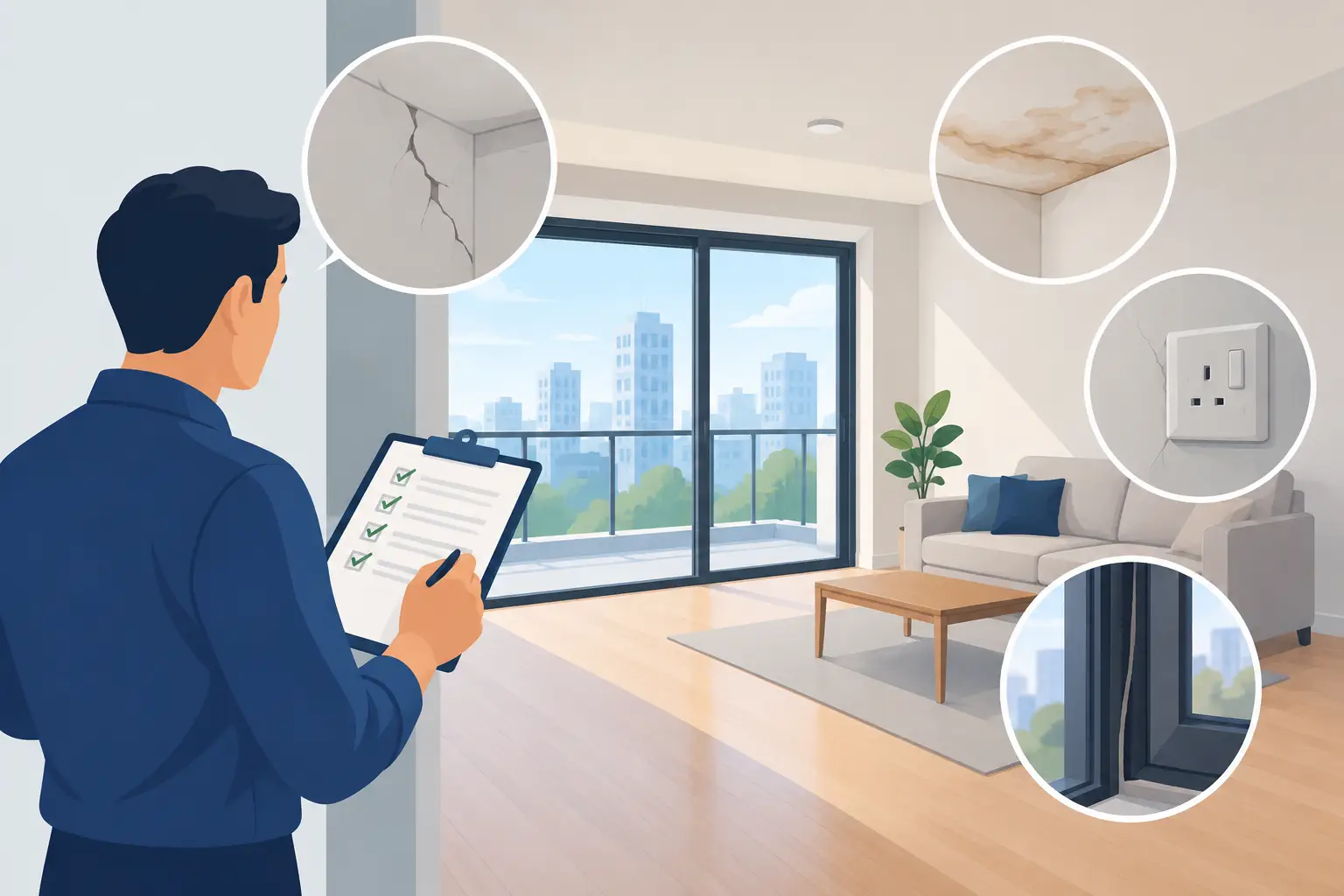
A bright living room, a renovated kitchen, and a seller who says the flat is "ready to move into" can make it easy to overlook hidden defects. But in a Spanish resale purchase, the most expensive problems are often not visible during a 20-minute viewing. They may sit behind a fresh coat of paint, above a false ceiling, inside a shared building system, or in documents no one has shown you yet.
The goal is not to assume every flat has a serious problem. It is to replace optimism with a process. A defect may be minor and manageable, a fair reason to negotiate, or a reason to walk away. You cannot make that call until you know what you are looking at, what evidence exists, and who would pay to fix it.
Why hidden defects matter more in resale flats
A resale flat is not just the apartment behind the front door. You are buying a share of the building, its common elements, and its future expenses. A perfectly acceptable interior can still come with a deteriorating roof, pending facade work, outdated plumbing risers, or an elevator replacement that the homeowners' association has not yet collected.
This is where many buyers make the wrong comparison. They focus on the asking price per square meter versus similar listings, then treat condition as a secondary detail. Condition is part of price. A flat priced in line with the neighborhood can still be overpriced if it needs work that has not been reflected in the asking price.
Registered transaction data and comparable listings can help establish a market range, but they cannot inspect a damp wall or read a community meeting for you. Market analysis tells you whether the price starts from a defensible position. Due diligence tells you whether the property deserves that price.
Hidden defects are not only physical problems
Buyers often hear “defect” and think of leaks, cracks, or electrical faults. Those matter, but the risk categories are wider. In a Spanish apartment purchase, investigate the physical condition of the flat, the condition of the building, legal and registry information, and the financial position of the community.
A defect can also be an unauthorized renovation, a terrace enclosure that does not match the records, unpaid community fees, or an upcoming special assessment. These issues do not always make a purchase impossible. They do change the risk, timeline, financing options, and negotiating position.
Inside the flat
Fresh paint can conceal moisture stains. New flooring can hide uneven subfloors. A staged room can make it difficult to see wall cracks, poor window seals, or limited storage. Ask to open windows, run taps, flush toilets, and test lights. Visit at a time when you can hear street noise and, if possible, when the building is active.
Pay close attention to bathrooms, kitchens, exterior-facing walls, ceilings below terraces, and areas around windows. Musty odors, swollen baseboards, peeling paint, loose tiles, and persistent condensation deserve questions. None proves a major structural issue on its own, but each is a prompt to investigate further.
Electrical and plumbing systems deserve particular care in older buildings. Ask when they were last renewed, not merely when the kitchen or bathroom was cosmetically updated. A new shower screen does not tell you whether the pipes behind the wall are aging or whether the electrical panel is adequate for modern use.
In the building
Common elements can produce costs far beyond a broken appliance. Look at the entrance, stairwell, facade, roofline, basement, garage, elevator, and visible drainage. Neglect in these areas does not automatically mean a poor purchase, but it may indicate deferred maintenance and future expense.
Ask directly whether major works have been discussed, approved, or anticipated. Facade rehabilitation, accessibility improvements, roof repairs, plumbing riser replacement, and elevator work can be substantial. If the work is approved but not yet paid, establish exactly who is responsible and put the agreement in writing before you commit.
Do not rely only on a verbal answer from an agent or owner. Request the most recent community meeting minutes and information on planned assessments. Minutes can reveal recurring leaks, disputes, nonpaying owners, litigation, planned works, or projects that have been delayed rather than resolved.
In the paperwork
The listing description is marketing material, not proof. Compare the flat's description, cadastral information, registry details, and available plans. Differences in size or layout are common, and not every discrepancy is serious. Still, unexplained differences should be clarified before an offer becomes a binding commitment.
Check whether renovations requiring authorization were properly approved. Enclosed terraces, altered layouts, removed walls, and changes to shared elements can create legal or practical issues later. Your lawyer should review the ownership title, registry status, community debts, municipal matters, and the terms of the proposed contract.
An informed buyer uses specialists for their proper roles. A data platform can assess market context and price evidence. A lawyer reviews legal documentation. A qualified architect, technical architect, or survey professional assesses construction and building condition. No single source replaces the others.
A practical process for finding hidden defects
Start before the viewing. Read the listing critically and record every claim that affects value: recent renovation, new installations, exterior orientation, terrace, storage room, parking, elevator, and building condition. These are not facts until you see documentation or physical evidence.
At the first visit, avoid spending the entire time measuring furniture placement. Take photos where permitted, note odors and noise, and inspect the areas that commonly hide problems. Ask why the seller is moving, how long the property has been on the market, what work has been carried out, and whether there have been leaks, insurance claims, or disputes with neighbors.
If the flat remains a serious candidate, make your second review more disciplined. Bring a professional when the building is old, signs of moisture appear, renovations are extensive, or the purchase price leaves little room for error. The cost of an inspection is small compared with inheriting a major repair without having priced it into the deal.
Before making a final offer or signing a deposit agreement, request and review:
- Recent community meeting minutes and confirmation of community fee payments.
- Details of approved or expected building works and any special assessments.
- Available renovation permits, invoices, and warranties for material work.
- Registry and cadastral information, plus clarification of any mismatch.
- The energy certificate and any documents relevant to occupancy, utilities, or building compliance.
This is not paperwork for paperwork's sake. Each document answers a financial question: what are you buying, what could it cost after completion, and is the seller able to transfer it without unresolved obligations?
How to use defects in a negotiation
Not every issue should produce the same response. A minor repair with a clear cost may justify a price adjustment. An uncertain issue with a potentially large cost may justify making the offer conditional on further review, extending the due diligence period, or stepping away.
Keep the conversation factual. Instead of saying the flat “feels overpriced,” connect the offer to evidence: comparable market prices, the condition observed, documented upcoming works, and estimated repair costs. This is stronger than arguing about taste or reacting to sales pressure.
Be careful with estimates. A contractor's rough verbal comment is not the same as a written scope of work, and a single quote may not capture the full cost. Use ranges where uncertainty remains. If you cannot establish the scale of a problem, do not pretend it is a small one simply because you want the flat.
InmoBuyer can help buyers separate the advertised price from market-grounded price context before negotiation. That context becomes more useful after the viewing, when you can adjust your decision for condition, repair exposure, and building-level risk. It is indicative market analysis, not a regulated appraisal or a substitute for legal and technical advice.
When a defect should stop the purchase
A visible issue is not automatically a deal breaker. Older flats often need updates, and buyers with time, budget, and a realistic renovation plan may find value where others see inconvenience. The key question is whether the risk is understood and reflected in the total cost.
Walk away, or pause the process, when essential information is withheld, documents contradict the seller's claims, major works have no clear funding plan, or a technical concern cannot be properly assessed before you are asked to commit. A seller's deadline is not evidence. Neither is an agent's assurance that “these things are normal.”
The best purchase decisions do not come from finding a flawless flat. They come from seeing the flaws clearly, assigning them a realistic cost, and deciding with enough evidence to remain comfortable after the keys are handed over.